Introduction: The Evolving Landscape of Restaurant Payment Technology
For restaurant owners in today’s competitive hospitality industry, selecting the right payment processing solution has become increasingly complex and consequential. A thorough restaurant payment processor comparison reveals that the technology has evolved far beyond simply accepting card payments. Modern hospitality payment systems now integrate directly with table management, kitchen operations, staff scheduling, and customer relationship tools. With Irish restaurants processing an estimated €8.5 billion annually according to the Restaurants Association of Ireland, choosing the optimal hospitality payment solutions can significantly impact operational efficiency, staff satisfaction, and the overall dining experience. At Compayre.ie, we’ve analyzed numerous payment solutions designed specifically for restaurants to help owners make informed decisions that align with their unique business models, service styles, and growth ambitions.
Core Restaurant Payment Processing Requirements
Beyond Basic Transaction Processing
Before diving into our detailed restaurant payment processor comparison, let’s establish the foundational features any quality restaurant payment solution should provide:
Essential Payment Capabilities
- Card-present processing: Tableside and counter transactions
- Contactless payments: NFC card and mobile wallet acceptance
- Manual entry options: Phone orders and advance reservations
- Cash management: Integrated cash drawer reconciliation
- Gift card processing: Both physical and digital options
- Offline transaction handling: Functionality during internet outages
Hospitality-Specific Requirements
- Tipping management: Pre-authorization and post-service options
- Split payment handling: Multiple methods for dividing bills
- Tab management: Opening, adding items, and closing efficiently
- Service charges: Automatic calculations for larger parties
- Discount application: Handling promotions and special offers
- Refund processing: Partial and full return capabilities
According to Fáilte Ireland, restaurants that implement integrated payment solutions report 15-20% improvements in operational efficiency and staff productivity.
Restaurant Payment Processor Comparison: Table Management Features
Table Service Optimization Features
One of the most valuable aspects of modern hospitality payment solutions is their integration with table management systems:
Table Assignment and Status Tracking
- Visual table maps: Customizable digital floor plans
- Status indicators: Available, occupied, bill requested, payment pending
- Reservation integration: Syncing with booking systems
- Table turnover metrics: Performance tracking and optimization
- Wait time management: Accurate guest communication
- Server section management: Balanced workload distribution
Advanced Table Management Features
- Dynamic floor plans: Adjusting layouts for events or service periods
- Guest preferences tracking: Noting special requests or past visits
- Table combining/splitting: Flexible party accommodation
- VIP guest identification: Enhanced service for key customers
- Service timing tracking: Course pacing and efficiency metrics
For a detailed assessment of systems with robust table management, our restaurant payment processor comparisonexperts at Compayre.ie can provide personalized recommendations based on your restaurant’s specific service model.
Case Study: Dublin Fine Dining Establishment
A high-end Dublin restaurant implemented an integrated table management and payment system with these results:
- Table turnover increased 22% during peak periods
- Server tips improved 17% due to more efficient service
- Guest satisfaction scores rose 24% based on post-dining surveys
- Reduced double-seating errors by 96% compared to manual systems
Restaurant Payment Processor Comparison: Tipping Management Features
Staff Compensation Features Comparison
Our restaurant payment processor comparison research reveals significant differences in how systems handle gratuities:
Tipping Interface Options
- Preset percentage options: Customizable quick-select buttons
- Custom amount entry: Flexible guest-determined gratuity
- Tip pooling tools: Automated distribution among staff
- Tip reporting: Compliance with tax regulations
- Cash tip recording: Comprehensive gratuity tracking
- Service charge automation: For large parties or special events
Server Attribution Methods
- Individual server assignment: Direct tip allocation
- Team service models: Proportional distribution options
- Hybrid attribution: Mixed individual/team approaches
- Management override capabilities: Exception handling
- Shift change accommodation: Seamless service transitions
According to NPI.ie, restaurants using advanced tipping systems report 30% reductions in tip-related disputes and significantly improved staff satisfaction.
Digital vs. Traditional Tipping Considerations
The evolution of payment technology has created new considerations for restaurant tipping:
| Tipping Method | Customer Comfort | Average Tip % | Staff Preference | Accounting Efficiency |
|---|---|---|---|---|
| Traditional paper slip | ????? | 12-15% | ????? | ????? |
| Terminal prompt | ????? | 15-20% | ????? | ????? |
| Tableside device | ????? | 18-22% | ????? | ????? |
| QR code payment | ????? | 15-18% | ????? | ????? |
| Digital receipt | ????? | 10-15% | ????? | ????? |
Split Bill Features: Restaurant Payment Processor Comparison
Bill Division Capabilities
The ability to handle complex payment scenarios directly impacts customer satisfaction:
Split Payment Methods
- Even splits: Dividing total equally among guests
- Item-by-item assignment: Specific dish attribution
- Percentage-based division: Custom allocation by guest
- Separate checks from start: Individual ordering tracking
- Mixed payment types: Handling cash and multiple cards
- Partial payments: Processing incomplete settlements
Advanced Split Capabilities
- Group reservations: Pre-assigned payment handling
- Corporate expense separation: Business vs. personal items
- Round-up charity donations: Per-check contribution options
- Digital receipt distribution: Individual documentation
- Split payment for delivery platforms: Multi-party remote orders
Our merchant services comparison tool helps restaurants evaluate which payment solutions offer the most appropriate split bill features for their specific customer base.
Split Bill User Experience Analysis
Payment systems vary significantly in how they present split bill options:
| Split Method | Staff Training Required | Transaction Time | Guest Satisfaction | Error Rate |
|---|---|---|---|---|
| Terminal-driven | ????? | 2-4 minutes | ????? | Moderate |
| Tableside device | ????? | 1-2 minutes | ????? | Low |
| Guest app-enabled | ????? | <1 minute | ????? | Very low |
| Server verbal request | ????? | 3-5 minutes | ????? | High |
| Combined paper/digital | ????? | 2-3 minutes | ????? | Moderate |
According to research from SmartPOS.ie, restaurants implementing intuitive split bill technology see an average 13% increase in table turnover during peak periods and 22% reduction in payment processing time.
Integration Capabilities: Restaurant Payment Processor Comparison
POS and Kitchen Management Integration
The most valuable hospitality payment solutions seamlessly connect with other critical restaurant systems:
Point of Sale Integration Depth
- Menu synchronization: Real-time item availability
- Pricing updates: Centralized menu management
- Modifier tracking: Special requests and customizations
- Inventory depletion: Automatic stock management
- Combo meal handling: Package pricing and components
- Special pricing periods: Happy hour and promotional timing
Kitchen Display System Coordination
- Order routing: Station-specific ticket distribution
- Preparation timing: Course coordination
- Allergy/dietary alerts: Critical safety information
- Completion notification: Ready-for-service indicators
- Modification highlighting: Special instruction emphasis
- Production analytics: Kitchen performance metrics
Accounting and Business Intelligence Connectivity
Back-office integration capabilities significantly impact administrative efficiency:
Financial System Integration
- Sales data export: Automated accounting feeds
- Tax category assignment: VAT and service charge separation
- Labor cost tracking: Server hours and compensation
- Vendor payment management: Inventory and supply costs
- Bank reconciliation: Automated settlement matching
- Multi-location consolidation: Enterprise reporting
Analytics and Reporting Depth
- Sales performance: Item popularity and profitability
- Staff productivity: Server efficiency metrics
- Payment method analysis: Card vs. cash patterns
- Discount utilization: Promotion effectiveness
- Time-of-day patterns: Peak period identification
- Customer retention: Repeat visit tracking
According to the Central Statistics Office, restaurants employing integrated payment and management systems report 28% higher profitability compared to those using disconnected solutions.
Mobile and Contactless Payment Capabilities
Modern Payment Method Support
Today’s dining customers expect flexible payment options:
Contactless Technology Options
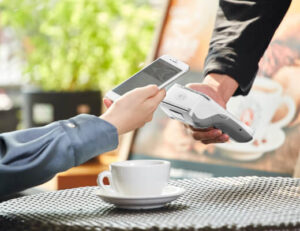
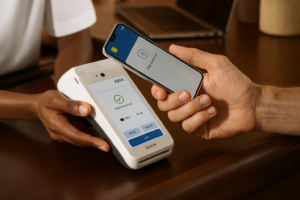
- NFC card processing: Tap-to-pay credit/debit cards
- Mobile wallet acceptance: Apple Pay, Google Pay, Samsung Pay
- QR code payments: Scan-to-pay functionality
- SMS payment links: Remote payment options
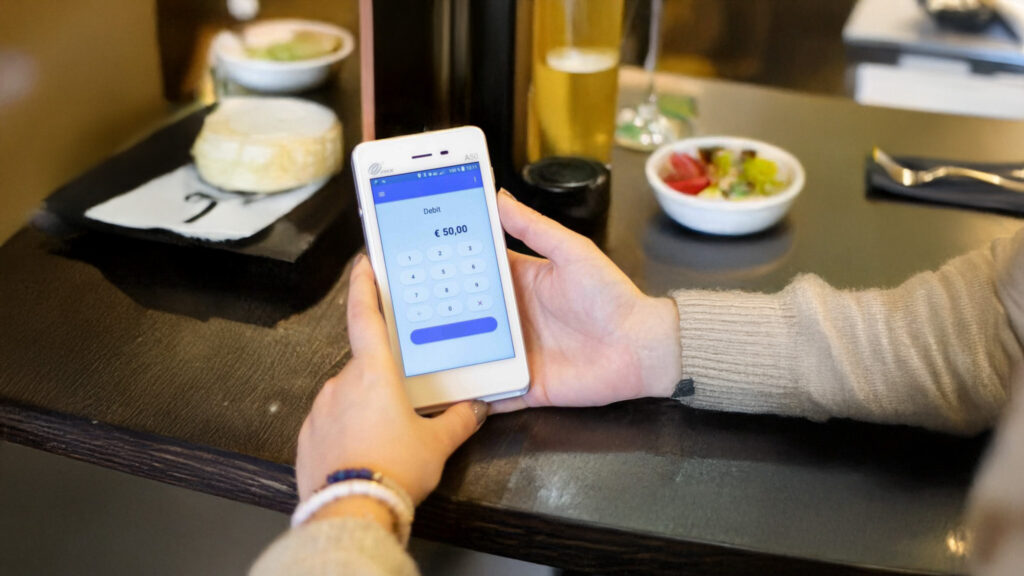
- Pay-at-table devices: Tableside processing
- Digital receipt delivery: Email/text documentation
Self-Service Payment Innovations
- QR code table ordering: Guest-initiated item selection
- Order-ahead functionality: Pre-arrival payment processing
- Kiosk integration: Self-service ordering and payment
- Digital gift card sales: Online and in-restaurant purchasing
- Loyalty program integration: Points earning and redemption
- Subscription billing: Wine club and dining membership options
Our restaurant payment processor comparison research indicates that restaurants offering at least three contactless payment options see 17-23% higher average ticket values compared to cash-only or limited-option establishments.
Security and Compliance Considerations
Restaurant-Specific Security Challenges
The hospitality industry faces unique payment security concerns:
PCI Compliance Simplification
- Point-to-point encryption: Securing card data from capture
- Tokenization: Replacing sensitive data with secure tokens
- EMV chip compliance: Fraud liability protection
- End-to-end encryption: Protecting data throughout processing
- PCI scope reduction: Minimizing compliance burden
- Self-assessment tools: Simplifying documentation requirements
Staff Security Protocols
- Role-based access controls: Appropriate permission levels
- Staff authentication: Secure system access
- Void/refund authorization: Management approval workflows
- Server shift reconciliation: Accurate attribution
- Training resources: Payment security education
- Compliance certification: Documentation and verification
The Restaurants Association of Ireland reports that payment security breaches cost affected restaurants an average of €22,000 in direct losses and remediation expenses, highlighting the importance of robust security features.
Pricing Models for Restaurant Payment Processing
Understanding Cost Structures
Restaurant payment processing costs can be complex and vary significantly between providers:
Typical Fee Components
- Transaction percentage: Usually 1.5-3.5% of payment amount
- Per-transaction fee: Additional €0.10-0.30 per payment processed
- Monthly platform fee: Typically €30-100 for software access
- Hardware costs: Terminal purchase or lease expenses
- Integration fees: Connections to other restaurant systems
- PCI compliance fees: Security standard maintenance charges
Industry-Specific Pricing Considerations
- Gratuity exclusion: Whether tips are included in processing percentages
- Card mix adjustment: Different rates for credit vs. debit
- Seasonal volume fluctuation: Accommodating business patterns
- Average ticket value impact: Higher tickets may qualify for lower rates
- Contract length influence: Term commitment vs. rate relationship
- Hardware bundling options: Terminal inclusion in service packages
Our payment processing comparison service helps restaurants calculate the total cost of ownership across different pricing models and provider options.
Case Studies: Restaurant Implementation Success Stories
Fast-Casual Restaurant Implementation
A growing fast-casual chain with five locations implemented an integrated payment solution with these results:
- Table turnover increased 17% during lunch rush
- Average transaction time decreased 43% from order to payment
- Staff training time reduced 62% for new employees
- Administrative labor decreased 14 hours weekly through automation
- Customer satisfaction scores improved 22% according to follow-up surveys
Fine Dining Establishment Transformation
A high-end restaurant implemented a comprehensive hospitality payment solution with these outcomes:
- Average check value increased €12 through strategic upselling features
- Server tips improved 24% with tableside payment capabilities
- Split bill processing time reduced 68% with dedicated functionality
- Reservation integration decreased no-shows by 37%
- Loyalty program participation grew 215% through payment integration
Pub and Casual Dining Results
A traditional Irish pub with food service implemented an integrated payment system with these benefits:
- Bar tab management errors reduced 92%
- Average closing time decreased 45 minutes nightly through efficient checkout
- Food and beverage pairing sales increased 28% through suggestive selling
- Staff retention improved 35% due to better tipping and operational efficiency
- Inventory management accuracy improved 43% through sales integration
Decision Framework: Selecting Your Restaurant Payment Solution
Self-Assessment Criteria
When conducting your own restaurant payment processor comparison, consider these critical factors:
Service Model Alignment
- Table service vs. counter service: Different operational requirements
- Average party size: Split bill complexity requirements
- Meal period patterns: Peak volume handling capabilities
- Special event frequency: Flexible configuration needs
- Staff structure: Tip distribution requirements
- Reservation reliance: Booking system integration needs
Technical Infrastructure Evaluation
- Internet reliability: Offline processing requirements
- Existing POS investment: Integration capabilities
- Physical space constraints: Terminal and hardware footprint
- IT support resources: Implementation and maintenance capabilities
- Multiple location considerations: Enterprise management needs
- Growth projections: Scalability requirements
Our hospitality payment experts can provide personalized guidance based on your restaurant’s specific operational model and requirements.
Implementation Best Practices
Ensuring a Smooth Transition
Implementing new restaurant payment technology requires careful planning:
Pre-Implementation Preparation
- Staff involvement: Gathering input from users
- Process documentation: Mapping current workflows
- Data migration planning: Historical information transfer
- Integration testing: Connecting with existing systems
- Hardware assessment: Space and connectivity evaluation
- Training schedule development: Minimizing operational disruption
Staff Training Approaches
- Role-specific education: Customized for different positions
- Hands-on practice sessions: Real-world scenario simulation
- Reference materials development: Quick-access guides
- Phased functionality introduction: Building on core capabilities
- Designated system champions: Peer support structure
- Post-implementation refreshers: Reinforcing optimal usage
According to Fáilte Ireland, restaurants that invest at least 12 hours in staff training during payment system implementation see 67% faster adoption rates and 43% fewer operational disruptions.
Conclusion: Making Your Restaurant Payment Technology Decision
Selecting the right payment processing solution for your restaurant involves balancing numerous factors including table management integration, tipping capabilities, split bill functionality, and system integration depth. Our comprehensive restaurant payment processor comparison reveals that the ideal solution varies significantly based on your specific service model, technical requirements, and operational priorities.
Rather than focusing solely on processing rates, we recommend restaurant owners conduct a thorough evaluation of the operational efficiencies, staff benefits, and customer experience enhancements offered by different hospitality payment solutions. The right choice will align with both your current service model and future growth plans while delivering tangible improvements in operational efficiency and guest satisfaction.
At Compayre.ie, we help Irish restaurant owners navigate these complex decisions with vendor-neutral comparisons and personalized recommendations based on your specific business requirements and service approach.
Frequently Asked Questions
How important is tableside payment capability for full-service restaurants?
For full-service restaurants, tableside payment technology typically increases table turnover by 15-20% during peak periods while improving average tip percentages by 18-22%. This capability has become increasingly important as customers prioritize payment security and convenience.
Can small independent restaurants afford advanced payment technology?
Yes, the market now offers scalable solutions appropriate for independent restaurants. While enterprise systems may have seemed cost-prohibitive in the past, today’s cloud-based options provide sophisticated capabilities with manageable monthly subscription costs rather than large upfront investments.
How difficult is it to switch payment processors if I’m unhappy with my current provider?
The complexity depends on your integration depth and contract terms. Transitions typically require 2-4 weeks for implementation and training. The most significant challenges usually involve hardware changes and staff retraining rather than technical integration. Planning for a transition period where both systems operate simultaneously ensures continuity.
Do customers prefer to split bills themselves or have servers handle it?
Customer preferences vary by demographic and establishment type. Research indicates that younger diners (under 40) strongly prefer self-directed splitting through tableside devices or apps, while older demographics often prefer server-managed division. The ideal system offers both options to accommodate all preferences.
How do payment systems handle the transition between lunch and dinner pricing?
Modern systems manage time-based pricing through automatic menu transitions that can be scheduled by day, time, and even table section. This functionality eliminates manual price changes and reduces errors during service period transitions, particularly valuable for restaurants with significant price differences between meal periods.
Need personalized guidance on selecting the right payment processing solution for your restaurant? Our restaurant payment processor comparison team at Compayre.ie can be reached at +353 1 265 4403 for expert advice tailored to your specific hospitality business needs. As a Guaranteed Irish company, we understand the unique challenges and opportunities facing Irish restaurants and can help you navigate payment technology decisions that optimize both operational efficiency and guest experience.
*[POS]: Point of Sale *[NFC]: Near Field Communication *[EMV]: Europay, Mastercard, and Visa *[VAT]: Value Added Tax *[PCI]: Payment Card Industry