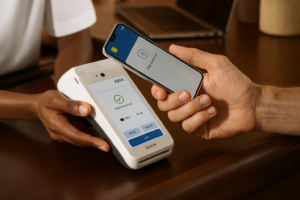
Introduction: The Critical Importance of Payment Security
When selecting a payment processor, merchants often focus primarily on transaction fees and features, overlooking the vital considerations of provider stability and security capabilities. A comprehensive payment gateway security comparison reveals significant differences in fraud prevention, data protection, and financial stability that can dramatically impact your business risk exposure. According to the Central Bank of Ireland, payment fraud resulted in approximately €22 million in direct losses to Irish businesses in 2024, with small to medium enterprises bearing a disproportionate share of these costs. Beyond direct fraud losses, merchants face additional risks from service disruptions, data breaches, and processor insolvency. At Compayre.ie, we’ve developed a systematic approach to evaluating payment provider stability and security to help merchants understand their risk exposure and select processors that offer the optimal balance of protection and functionality.
Financial Stability: Assessing Provider Viability
Why Payment Provider Financial Health Matters
The financial stability of your payment processor directly impacts operational reliability:
Business Continuity Risks
- Processor insolvency impact: Potential fund loss and service disruption
- Acquisition implications: Service changes following ownership transitions
- Funding reserve adequacy: Ability to manage processing liabilities
- Capital investment capacity: Technology and security enhancement capabilities
- Regulatory compliance costs: Financial ability to meet evolving requirements
According to a payment gateway security comparison study by Enterprise Ireland, approximately 8% of European payment processors have experienced significant financial distress or restructuring events in the past five years, creating service disruptions for their merchant customers.
Stability Evaluation Metrics
Several key indicators help assess processor financial health:
Financial Stability Indicators
| Indicator Category | What to Examine | Risk Signals | Stability Signals |
|---|---|---|---|
| Operational History | Years in business | <3 years | 10+ years |
| Transaction Volume | Payment processing value | Declining/stagnant | Steady growth |
| Parent Company | Corporate ownership | Frequent changes | Stable ownership |
| Funding Status | Investment situation | Excessive debt | Strong capitalization |
| Public Disclosures | Financial statements | Losses, debt | Profitability, reserves |
Ownership Structure Considerations
- Publicly traded vs. private: Transparency and reporting differences
- Bank-owned processors: Additional regulatory oversight benefits
- Private equity ownership: Cost-cutting and exit strategy risks
- Startup/venture-backed: Innovation vs. stability trade-offs
- Consortium ownership: Industry alignment advantages
Our financial stability assessment tool provides a structured evaluation of processor financial health based on publicly available information.
Case Study: Processor Failure Impact Analysis
The collapse of a European payment processor in 2023 demonstrates potential consequences:
Disruption Timeline
- Initial signs: Delayed merchant settlements extended from 2 to 7+ days
- Service deterioration: Customer support became unreachable
- Regulatory intervention: Processing license suspension
- Fund access limitations: Merchant inability to withdraw balances
- Complete service termination: Processing capabilities ceased entirely
Business Impact on Merchants
- Average of 3-4 weeks without processing capability
- Approximately €15,000-40,000 in trapped funds per merchant
- 15-30% average revenue loss during transition period
- 60-80 hours of staff time required for emergency provider migration
- Permanent loss of customer payment credentials and transaction history
The European Payments Council emphasizes that conducting thorough due diligence on processor financial stability significantly reduces these continuity risks.
Security Certifications and Compliance Standards
Essential Security Certifications
Formal certifications provide an objective measure of security capabilities:
Critical Security Standards Comparison
| Certification | What It Evaluates | Importance | Renewal Frequency |
|---|---|---|---|
| PCI DSS Level 1 | Payment card data security | Essential | Annual |
| ISO 27001 | Information security management | Very High | 3 years with annual audits |
| SOC 1/SOC 2 | Control environment and processes | High | Annual |
| 3DS Certification | Authentication security | Increasing | 2-3 years |
| GDPR Compliance | Data protection practices | Essential in EU | Ongoing |
Certification Validation Approaches
- Certification documentation: Requesting formal attestations
- Public registry verification: Checking official certification listings
- Independent audit reports: Reviewing third-party assessments
- Compliance history evaluation: Identifying past issues or lapses
- Regulatory action research: Checking for enforcement incidents
A thorough payment gateway security comparison should include verification of these certifications rather than relying solely on marketing claims.
Compliance Requirements by Business Type
Security standard relevance varies based on merchant category:
Industry-Specific Compliance Needs
- E-commerce: PCI DSS, 3DS2, ISO 27001
- Retail/in-person: P2PE, PCI DSS, PIN security
- Subscription businesses: GDPR, recurring billing standards
- Multi-channel merchants: Combined standards across channels
- High-risk industries: Enhanced due diligence, AML compliance
The Banking & Payments Federation Ireland reports that 65% of Irish merchants are unaware of which security certifications their payment processors maintain, creating significant blind spots in risk management.
Visit our compliance requirement finder to identify the specific security standards most relevant to your business type.
Data Security Architecture and Practices
Data Protection Infrastructure
Core security technologies provide the foundation for payment security:
Critical Security Infrastructure Elements
- Encryption methodologies: Data protection during transmission and storage
- Tokenization implementation: Sensitive data replacement techniques
- Network segregation practices: Isolation of payment environments
- Server security architecture: Physical and logical protection layers
- Redundancy and backup systems: Data availability safeguards
According to comprehensive payment gateway security comparison research, the difference between basic and advanced security implementations can result in a 30-50× reduction in successful breach attempts.
Data Security Best Practices
Beyond technology, operational practices significantly impact security:
Operational Security Comparison Factors
| Security Practice | Basic Implementation | Advanced Implementation | Impact on Risk |
|---|---|---|---|
| Access Controls | Role-based permissions | Zero-trust + MFA | High |
| Code Security | Regular testing | Continuous testing + bounty programs | Very High |
| Vulnerability Management | Scheduled scanning | Continuous monitoring | High |
| Incident Response | Basic plan | Simulated exercises + rapid response | Critical |
| Third-Party Risk | Vendor questionnaires | Formal audit requirements | Moderate-High |
When conducting a payment gateway security comparison, evaluate both technical infrastructure and operational practices to gain a complete risk perspective.
Processor Security Transparency
Provider openness about security practices varies dramatically:
Transparency Evaluation Criteria
- Security documentation quality: Depth and clarity of practices
- Vulnerability disclosure policies: Approach to security researchers
- Security team accessibility: Direct contact availability
- Incident notification practices: Communication commitments
- Post-incident transparency: Disclosure of previous events
Our data security assessment guide provides a structured framework for evaluating processor security practices during your selection process.
Fraud Prevention Capabilities and Tools
Fraud Prevention Technology Comparison
The sophistication of fraud detection systems varies significantly:
Core Fraud Prevention Components
- Machine learning models: Behavioral pattern recognition
- Device fingerprinting: User hardware/software identification
- Behavioral biometrics: User interaction pattern analysis
- Real-time rule engines: Transaction scoring and decisioning
- Network intelligence: Cross-merchant fraud pattern identification
A comprehensive fraud prevention tool comparison reveals that advanced systems can reduce fraud rates by 60-85% compared to basic implementations.
Fraud Strategy Flexibility and Control
The ability to customize fraud prevention approaches is critical:
Customization Capability Assessment
| Customization Element | Limited Flexibility | High Flexibility | Business Impact |
|---|---|---|---|
| Rule Configuration | Predefined only | Full customization | Significant |
| Risk Threshold Setting | Few options | Graduated controls | High |
| Industry Specialization | Generic approach | Vertical-specific rules | Very High |
| Authentication Control | Fixed requirements | Risk-based application | Moderate-High |
| Reporting Granularity | Basic metrics | Detailed analytics | Moderate |
According to fraud prevention tool comparison data from the Retail Excellence Ireland, merchants with customized fraud prevention strategies experience 35-50% lower fraud losses compared to those using default configurations.
Fraud Prevention Tool Feature Comparison
Specific capabilities create significant protection differences:
Advanced Fraud Prevention Features
- 3D Secure 2.0 optimization: Risk-based authentication application
- Velocity monitoring: Unusual activity pattern detection
- Address verification systems: Location validation capabilities
- Account takeover protection: Credential compromise prevention
- Refund/chargeback fraud tools: Post-transaction abuse prevention
Industry-Specific Fraud Tools
- Card testing prevention: Random transaction blocking
- Friendly fraud mitigation: Evidence collection automation
- High-risk geography controls: Location-based rule adjustment
- Reseller/customer segregation: Account hierarchy management
- Subscription fraud tools: Trial abuse prevention
Our fraud protection feature comparison provides detailed analysis of prevention capabilities across major processors.
Breach History and Security Track Record
Security Incident Analysis
Past security performance often predicts future protection quality:
Security History Evaluation Framework
- Breach disclosure practices: Transparency about past incidents
- Response quality assessment: Handling of previous situations
- Root cause patterns: Recurring issues vs. isolated events
- Remediation effectiveness: Post-incident improvement evidence
- Notification timeliness: Communication speed during events
A thorough payment gateway security comparison should include research into historical security incidents and provider responses.
Red Flags in Security History
Several patterns indicate heightened security risk:
Warning Signs in Provider History
- Delayed breach disclosures: Notification longer than 72 hours
- Regulatory penalties: Fines for security shortcomings
- Multiple similar incidents: Repeated breach patterns
- Downplayed impact statements: Minimization of event significance
- Responsibility deflection: Blame shifting to third parties
The Irish Computer Society notes that approximately 35% of payment-related data breaches involve processors with previous security incidents, highlighting the importance of historical performance evaluation.
Security Culture Assessment
Organizational approach to security dramatically impacts protection quality:
Security Culture Indicators
- Leadership emphasis: Executive focus on security
- Resource allocation: Security team staffing and budget
- Bug bounty programs: Vulnerability reward structures
- Security communication: Transparency about practices
- Continuous improvement: Learning from incidents
According to payment gateway security comparison research, processors with strong security cultures typically invest 2.5-4× more in protection technologies and practices compared to industry averages.
Response Capabilities and Incident Management
Incident Response Framework Comparison
The quality of incident handling processes significantly impacts breach outcomes:
Response Capability Assessment
| Response Element | Basic Capability | Advanced Capability | Merchant Impact |
|---|---|---|---|
| Detection Time | Hours-Days | Minutes-Hours | Critical |
| Containment Speed | Days | Hours | Very High |
| Merchant Notification | Generic, delayed | Specific, immediate | High |
| Recovery Assistance | Limited guidance | Comprehensive support | High |
| Post-Incident Analysis | Basic review | Detailed forensics | Moderate |
A robust payment gateway security comparison should evaluate not just prevention capabilities but also response readiness.
Business Continuity and Disaster Recovery
Resilience planning directly impacts service availability during incidents:
Continuity Capability Factors
- Redundant processing infrastructure: Geographic distribution
- Recovery time objectives: System restoration timelines
- Alternative processing options: Transaction routing flexibility
- Data backup strategies: Information preservation approaches
- Business continuity testing: Regular simulation exercises
The Small Firms Association reports that payment service disruptions lasting more than four hours impact 60-75% of affected merchants’ daily revenue, emphasizing the importance of processor resilience.
Merchant Support During Incidents
The quality of guidance during security events varies dramatically:
Critical Support Elements
- Dedicated incident channels: Emergency contact methods
- Response team availability: 24/7 security support
- Communication clarity: Plain-language guidance
- Remediation assistance: Recovery help resources
- Documentation quality: Clear response instructions
Our incident response evaluation checklist helps assess processor capabilities before security events occur.
Conducting Your Own Payment Provider Security Assessment
Comprehensive Evaluation Framework
Follow this structured approach when evaluating processor security:
Assessment Process Steps
- Documentation review: Security practice verification
- Certification validation: Confirmation of compliance standards
- Financial stability research: Viability evaluation
- Security history investigation: Past incident research
- Reference verification: Similar merchant experiences
Critical Questions for Providers
- How is cardholder data protected throughout the transaction lifecycle?
- What fraud prevention tools are available and how customizable are they?
- How quickly are security vulnerabilities addressed when discovered?
- What is your incident response process and merchant communication approach?
- How do you ensure your third-party vendors maintain adequate security?
Visit our provider security questionnaire for a comprehensive list of evaluation questions.
Security Feature Prioritization Guide
Focus security evaluation on your specific risk profile:
Business Type Risk Assessment
| Business Category | Primary Security Concerns | Critical Protection Features |
|---|---|---|
| E-commerce | Card-not-present fraud, data breaches | 3DS2, tokenization, device fingerprinting |
| Physical Retail | Terminal tampering, employee fraud | P2PE, PIN protection, terminal monitoring |
| Omnichannel | Cross-channel fraud, credential stuffing | Unified fraud tools, consistent authentication |
| Subscription | Account takeover, chargeback fraud | Recurring billing tools, updater services |
| High-value Items | Sophisticated fraud, synthetic identity | Advanced ML, manual review tools |
This fraud prevention tool comparison framework helps identify the most relevant security features for your specific business model.
Balancing Security with Usability and Conversion
The Security-Conversion Tradeoff
Security must be balanced against customer experience impacts:
Conversion Impact by Security Measure
| Security Feature | Consumer Friction | Fraud Reduction | Optimal Application |
|---|---|---|---|
| 3D Secure 2.0 | Low-Moderate | High | Risk-based application |
| Address Verification | Low | Moderate | Selective implementation |
| CVC Requirement | Very Low | Moderate | Universal application |
| Velocity Controls | None | Moderate-High | Behind-the-scenes |
| Device Fingerprinting | None | High | Universal background use |
The most effective payment gateway security comparison evaluates both protection capabilities and their impact on legitimate customer experience.
Optimizing Security Implementation
Strategic application of security measures maximizes protection while preserving conversion:
Optimization Approaches
- Risk-based authentication: Applying extra steps selectively
- Progressive security implementation: Graduated measure application
- A/B testing security features: Measuring conversion impacts
- Customer messaging optimization: Explaining security measures
- Alternative authentication options: Providing verification choices
According to fraud prevention tool comparison research by Ecommerce Europe, optimized security implementations can achieve 90-95% of maximum fraud prevention benefit while maintaining 98%+ of conversion rates.
Conclusion: Creating Your Security-Based Selection Strategy
When selecting a payment processor, thorough evaluation of financial stability, security certifications, data protection practices, and fraud prevention capabilities is essential for minimizing risk exposure. Our comprehensive payment gateway security comparison research demonstrates that security capabilities vary dramatically between providers, with significant implications for merchant risk and liability.
Rather than treating security as a secondary consideration after pricing and features, we recommend conducting a structured risk assessment that evaluates processor stability, protection technologies, compliance status, and incident response capabilities. The most appropriate provider often isn’t the one with the lowest fees or most features but rather the one offering the optimal balance of security, stability, and functionality for your specific risk profile.
At Compayre.ie, we help Irish businesses navigate these complex security evaluations with vendor-neutral comparisons and personalized recommendations based on your specific protection requirements and business model.
Frequently Asked Questions
How important are security certifications when selecting a payment processor?
Very important, as they provide objective verification of security practices. PCI DSS compliance is an absolute requirement for any processor, while ISO 27001 and SOC 2 certifications indicate broader security program maturity. However, certifications alone are insufficient—they represent minimum standards rather than comprehensive security. Always verify certification status directly rather than relying on marketing claims, as approximately 15% of processors misrepresent their compliance status in sales materials according to our payment gateway security comparison research.
Do fraud prevention capabilities vary significantly between payment processors?
Yes, dramatically. Basic providers offer simple AVS and CVV verification, while advanced processors implement machine learning models, device fingerprinting, behavioral biometrics, and network intelligence. This capability gap can result in a 3-5× difference in fraud rates for identical transaction patterns. The most sophisticated tools automatically adapt to emerging threats and offer merchant-specific customization. Small to medium businesses often benefit most from providers with strong “out-of-the-box” protection, while larger merchants should prioritize customization capabilities.
How can I evaluate a processor’s security if I don’t have technical expertise?
Focus on verification rather than technical assessment. Request and verify security certifications through official registries. Research the provider’s breach history through news searches and regulatory disclosures. Check customer reviews specifically mentioning security and fraud prevention. Ask for references from similar businesses and question them about security experiences. Finally, evaluate the quality and detail of the processor’s security documentation—vague, marketing-focused materials often indicate inadequate practices, while comprehensive, specific documentation suggests security maturity.
Is there a trade-off between strong security and customer experience?
Yes, but it’s smaller than commonly believed with modern security tools. The key is implementing risk-based security that applies friction selectively based on transaction risk. For example, 3D Secure 2.0 can exempt low-risk transactions from challenges while providing strong protection for suspicious activity. Our fraud prevention tool comparison research indicates properly implemented risk-based security typically impacts less than 5% of legitimate transactions while preventing 85-90% of fraud attempts. The most significant conversion impacts come from outdated, inflexible security implementations rather than advanced protection systems.
How does processor financial stability impact merchant security?
Financial instability often precedes security degradation. Financially stressed processors typically reduce security investments first when cutting costs, leading to delayed updates, reduced monitoring, and security staff reductions. Additionally, unstable processors pose direct risks including transaction disruption, fund access delays or losses, and potential data access issues during transitions. For small to medium businesses, payment processor insolvency can create existential threats through the combination of revenue disruption and potential fund losses, making stability assessment a critical component of security evaluation.
Need personalized guidance evaluating payment provider security? Contact Compayre.ie at +353 1 265 4403 for expert advice tailored to your specific business requirements. As a Guaranteed Irish company, we provide unbiased, vendor-neutral security assessments to help you identify processors that offer the optimal balance of protection and functionality.
*[PCI DSS]: Payment Card Industry Data Security Standard *[ISO]: International Organization for Standardization *[SOC]: System and Organization Controls *[3DS]: 3D Secure *[GDPR]: General Data Protection Regulation *[P2PE]: Point-to-Point Encryption *[AML]: Anti-Money Laundering *[MFA]: Multi-Factor Authentication *[ML]: Machine Learning *[AVS]: Address Verification System *[CVV]: Card Verification Value