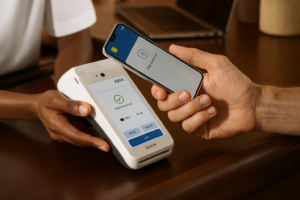
Our payment security standard comparison is essential for any Irish business evaluating payment processors in today’s digital economy. At Compayre, we conduct this detailed payment security standard comparison across providers operating in Ireland to help businesses make informed decisions about their payment processing partners.
This comprehensive analysis examines how major providers stack up regarding PCI certification levels, encryption methods, tokenization offerings, and breach history—critical factors that can significantly impact your business’s security posture and liability.
Payment Security Standard Comparison: Understanding PCI DSS Requirements
Before diving into our detailed payment security standard comparison, it’s important to understand what PCI DSS standards entail. The Payment Card Industry Data Security Standard (PCI DSS) is a set of security requirements designed to ensure all companies that process, store, or transmit credit card information maintain a secure environment.
The current PCI DSS version 4.0, released in March 2022, introduces more rigorous requirements that payment providers must implement by March 2025. Our payment security standard comparison evaluates providers based on both their current compliance status and their roadmaps for meeting these enhanced standards.
PCI DSS Compliance Levels in Our Payment Security Standard Comparison
When conducting a PCI compliance comparison, understanding the four levels of PCI compliance is crucial:
| Level | Transaction Volume | Requirements |
|---|---|---|
| Level 1 | Over 6 million transactions annually | Annual on-site assessment by QSA, quarterly network scan |
| Level 2 | 1-6 million transactions annually | Annual self-assessment, quarterly network scan |
| Level 3 | 20,000-1 million e-commerce transactions annually | Annual self-assessment, quarterly network scan |
| Level 4 | Less than 20,000 e-commerce transactions or up to 1 million regular transactions annually | Annual self-assessment, quarterly network scan (if applicable) |
Provider Payment Security Standard Comparison: Key Security Features
Our detailed payment security standard comparison evaluates key payment providers based on their security credentials and offerings. Here’s how they stack up:
Premium Tier Payment Providers
NPI maintains Level 1 PCI DSS certification, the highest possible standard. Their security features include:
- Encryption Methods: Point-to-point encryption (P2PE) for all transactions
- Tokenization Offerings: Advanced tokenization for recurring payments
- Breach History: Excellent security track record with no significant incidents
- Additional Security: 3D Secure 2.0 implementation, real-time fraud monitoring
NPI stands out in our PCI compliance comparison for their comprehensive merchant education program, helping businesses understand their security responsibilities. Learn more about how they compare to other providers in our merchant services comparison guide.
Established Irish Payment Providers
Several established Irish payment processors maintain Level 1 PCI DSS certification, with:
- Encryption Methods: End-to-end encryption across all payment channels
- Tokenization Offerings: Tokenization available for card-on-file transactions
- Breach History: Strong security records with transparent reporting
- Additional Security: Advanced fraud detection algorithms, comprehensive merchant dashboards
Their compliance frameworks make them strong contenders in our payment security standard comparison, particularly for businesses prioritizing domestic payment processing solutions.
Solutions for Small Businesses
SmartPOS has developed security approaches that position them favorably in our PCI compliance comparison for small businesses:
- Encryption Methods: End-to-end encryption with unique encryption keys
- Tokenization Offerings: Automatic tokenization for all stored payment information
- Breach History: Excellent security record with prompt resolution protocols
- Additional Security: Customizable security settings, two-factor authentication
SmartPOS simplifies PCI compliance for merchants, handling much of the compliance burden on their behalf. Their transparent approach to security has made them popular with Irish small businesses, as we’ve noted in our mobile payment solutions guide.
E-Commerce Payment Security Leaders
For online businesses, several providers consistently rank at the top of our payment security standard comparison:
- Encryption Methods: TLS 1.2+ for all transactions, with adaptive encryption standards
- Tokenization Offerings: Advanced tokenization with customizable retention policies
- Breach History: Strong security records with minimal incidents
- Additional Security: Advanced fraud detection, strong customer authentication (SCA) tools
Comprehensive security documentation and developer-friendly approaches make these solutions particularly valuable for e-commerce businesses seeking robust protection. Their advanced systems for fraud detection represent industry-leading technology in preventing fraudulent transactions.
International Payment Processors
Major international payment processors operating in Ireland offer robust security credentials:
- Encryption Methods: Point-to-point encryption with multiple key management options
- Tokenization Offerings: Sophisticated tokenization services for cross-channel payments
- Breach History: Transparent reporting on security incidents
- Additional Security: Advanced fraud scoring, machine learning detection systems
Their international expertise makes them stand out in our PCI compliance comparison for businesses operating across multiple markets.
Encryption in Payment Security Standard Comparison: Critical Protection Methods
When conducting a payment security standard comparison, encryption technologies play a crucial role in determining overall security efficacy. Modern payment providers typically offer:
- Point-to-Point Encryption (P2PE): Encrypts data from the moment a card is swiped until it reaches the payment processor
- End-to-End Encryption (E2EE): Ensures data remains encrypted throughout its entire journey
- Transport Layer Security (TLS): Secures data in transit between systems
Our guide to payment encryption technologies provides a more detailed explanation of these methods and their implementation across providers.
Tokenization: The Future of Payment Security
Any comprehensive PCI compliance comparison must examine tokenization capabilities, as this technology is increasingly central to payment security frameworks. Tokenization replaces sensitive card data with unique tokens that are useless if intercepted.
The most advanced providers in our payment security standard comparison offer:
- Network Tokenization: Tokens generated by the card networks themselves
- Cross-Channel Tokenization: Tokens that work across multiple payment channels
- Vault Storage: Secure cloud storage for tokenized payment information
- Customizable Retention: Policies for token lifecycle management
For recurring payment businesses, robust tokenization can significantly reduce PCI scope and enhance security. We explore this in greater depth in our subscription payment processing guide.
Payment Security Standard Comparison: Evaluating Breach History
A thorough payment security standard comparison must consider historical performance. While no system is immune to threats, how providers respond to incidents reveals much about their security commitment.
Our analysis looks at:
- Breach Transparency: How openly incidents are disclosed
- Response Time: How quickly vulnerabilities are addressed
- Remediation Efforts: Steps taken to prevent similar incidents
- Customer Communication: How affected parties are notified and supported
The most trustworthy providers maintain transparent breach reporting and robust response protocols.
Strong Customer Authentication (SCA) Implementation
Recent European regulations have made Strong Customer Authentication mandatory for electronic payments. Our PCI compliance comparison evaluates how effectively providers have implemented SCA requirements, including:
- Biometric Authentication: Fingerprint, facial recognition options
- Two-Factor Authentication: SMS, email, or app-based verification
- Risk-Based Authentication: Adaptive security based on transaction risk profiles
- Exemption Handling: Management of transactions eligible for SCA exemptions
Providers with sophisticated SCA implementations balance security with user experience, a critical consideration when selecting a payment partner. Learn more in our SCA compliance guide.
Making Security-Conscious Payment Provider Selections
When using our payment security standard comparison to select a provider, consider these key factors:
- Business Type Alignment: Different business models require different security approaches
- Transaction Volume: Higher volumes generally require more robust security measures
- Customer Experience Impact: Security measures should protect without frustrating customers
- Compliance Support: How much assistance the provider offers for meeting your obligations
- Security Innovation: The provider’s track record of adopting new security technologies
At Compayre, our merchant services experts can help you balance these considerations against cost and feature requirements.
The Cost of Security: Balancing Protection and Affordability
Our PCI compliance comparison also examines the cost implications of security features. While robust security is essential, it shouldn’t come with prohibitive fees. We evaluate:
- PCI Compliance Fees: Charges for compliance assistance and documentation
- Security Feature Premiums: Additional costs for enhanced security options
- Breach Insurance: Coverage offered in case of security incidents
- Non-Compliance Penalties: Potential costs of working with less secure providers
For many businesses, investing in a more secure provider can deliver long-term cost savings by preventing breaches and avoiding penalties. Our total cost of payment processing guide explores these considerations in detail.
Comparing Provider Response to Evolving Threats
The payment security landscape constantly evolves, with new threats emerging regularly. Leading providers in our payment security standard comparison demonstrate:
- Proactive Threat Intelligence: Monitoring for emerging vulnerabilities
- Regular Security Updates: Consistent platform improvements
- Bounty Programs: Rewards for identifying security issues
- Security Research Investment: Funding for advanced protection development
Providers that invest in staying ahead of threats generally offer better long-term security for their merchants.
According to a recent report by the European Central Bank, payment fraud attempts increased by 16% in 2024, highlighting the importance of selecting providers with robust security measures.
Conclusion: Security as a Competitive Advantage in Payment Security Standard Comparison
Our comprehensive payment security standard comparison reveals that payment security isn’t just about avoiding problems—it can be a business advantage. Consumers increasingly favor businesses that protect their financial information, making security an essential element of customer trust.
By selecting a provider with strong performance in our payment security standard comparison, Irish businesses can:
- Build stronger customer relationships through demonstrated security commitment
- Reduce operational risks associated with payment processing
- Streamline compliance efforts across multiple regulations
- Position themselves advantageously in an increasingly security-conscious marketplace
For personalized assistance in evaluating payment provider security credentials, contact Compayre at +353 1 265 4403. Our experts can help you navigate the complex landscape of payment security and find the provider that best meets your business’s specific security requirements.
This article is for informational purposes only and does not constitute legal advice. For specific compliance guidance, consult with a qualified legal professional. Data current as of May 2025.