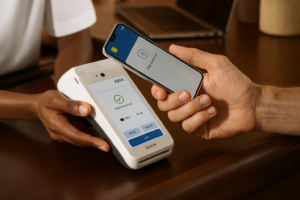
Introduction: The Growing Importance of Payment Provider Apps
For today’s merchants, the mobile apps provided by payment processors have evolved from simple account viewing tools to comprehensive business management platforms. A thorough payment app comparison reveals significant differences in functionality, reliability, and user experience that can dramatically impact daily operations and financial visibility. According to Retail Excellence Ireland, approximately 85% of Irish merchants now use payment provider apps at least weekly, with 40% accessing them daily for critical business functions. Yet despite this growing reliance, many businesses select payment processors with minimal consideration of their mobile app capabilities. At Compayre.ie, we’ve tested and evaluated the companion apps from major payment providers to help merchants understand the substantial differences in app quality and functionality when selecting a payment processor.
Core Functionality: Essential App Features Compared
Transaction Management Capabilities
The fundamental purpose of payment apps is transaction visibility:
Transaction Monitoring Feature Comparison
| Feature | Basic Apps | Mid-Tier Apps | Advanced Apps | Business Impact |
|---|---|---|---|---|
| Real-Time Transactions | Delayed (1-12 hrs) | Minimal Delay (5-30 min) | Instant | High |
| Transaction Details | Limited | Moderate | Comprehensive | Moderate-High |
| Refund Initiation | None or Limited | Basic | Advanced | High |
| Void Capabilities | Often Missing | Basic | Advanced | Moderate-High |
| Transaction Search | Basic | Good | Excellent | High |
Transaction Detail Depth
- Basic apps: Amount, date, last four digits
- Mid-tier apps: Above plus customer name, payment method type
- Advanced apps: All above plus order details, item-level data, invoice references
A comprehensive mobile payment solution review should evaluate the completeness of transaction information, as this directly impacts operational efficiency and customer service capabilities.
Settlement and Financial Reporting
The visibility of fund movements is critical for cash flow management:
Financial Reporting Feature Comparison
| Feature | Basic Apps | Mid-Tier Apps | Advanced Apps | Business Impact |
|---|---|---|---|---|
| Settlement Tracking | Basic | Detailed | Comprehensive | Very High |
| Pending Funds Visibility | Limited/None | Basic | Advanced | High |
| Fee Transparency | Minimal | Moderate | Complete | Moderate-High |
| Reconciliation Tools | None | Basic | Advanced | High |
| Financial Report Export | None or PDF Only | PDF, CSV | PDF, CSV, API | Moderate-High |
Settlement Information Quality
- Basic apps: Simple deposit amounts and dates
- Mid-tier apps: Categorized settlements with batch details
- Advanced apps: Item-level settlement tracking with fee breakdown and reconciliation tools
According to the Small Firms Association, businesses with comprehensive settlement visibility in their payment apps typically experience 30-45% fewer accounting reconciliation issues compared to those using basic apps.
Business Intelligence and Analytics
Modern payment apps offer valuable data insights:
Analytics Feature Comparison
| Feature | Basic Apps | Mid-Tier Apps | Advanced Apps | Business Impact |
|---|---|---|---|---|
| Sales Trends | Minimal/None | Basic Charts | Advanced Analysis | High |
| Customer Insights | None | Basic | Detailed | Moderate-High |
| Inventory Impact | None | None/Limited | Available | Industry-specific |
| Competitive Benchmarking | None | None | Available | Moderate |
| Custom Reporting | None | Limited | Extensive | Moderate-High |
Analytics Use Cases
- Sales pattern identification: Time-of-day, day-of-week, seasonal
- Payment method optimization: Understanding customer preferences
- Performance tracking: Year-over-year, month-over-month comparisons
- Goal setting and monitoring: Target tracking and projections
- Business decision support: Data-driven operational changes
Our payment app comparison research shows that merchants using advanced analytics features make operational changes 2-3× more frequently than those without these insights, leading to 12-18% higher average revenue growth.
User Experience Quality: Interface and Usability
App Interface Design Evaluation
The app interface directly impacts efficiency and adoption:
Design Quality Assessment
| Design Element | Poor Quality | Moderate Quality | High Quality | Usage Impact |
|---|---|---|---|---|
| Navigation Logic | Confusing | Adequate | Intuitive | Very High |
| Visual Clarity | Cluttered | Balanced | Clean | High |
| Information Hierarchy | Disorganized | Structured | Optimized | High |
| Customization Options | None | Limited | Extensive | Moderate |
| Accessibility Features | Minimal | Basic | Comprehensive | Variable |
Interface Quality Indicators
- Consistent design elements: Visual cohesion and patterns
- Efficient information density: Appropriate content per screen
- Intuitive navigation paths: Logical screen flows and menus
- Clear action indicators: Obvious interactive elements
- Effective feedback mechanisms: Confirms user actions
The European Retail Technology Association reports that poorly designed payment apps result in 35-50% lower daily active usage compared to well-designed alternatives, significantly reducing their business value.
Login and Authentication Experience
Security balanced with convenience is crucial for frequent app use:
Authentication Method Comparison
| Authentication Type | Security Level | Convenience | Support Quality | User Preference |
|---|---|---|---|---|
| Username/Password | Moderate | Low | Universal | Low |
| Biometric (Face/Finger) | High | Very High | Good | Very High |
| PIN Code | Moderate | High | Universal | High |
| 2FA Requirement | Very High | Low-Moderate | Variable | Moderate |
| Remember Device | Moderate | High | Good | High |
Login Experience Factors
- Authentication options: Available login methods
- Credential management: Password reset and recovery
- Session persistence: Stay-logged-in capabilities
- Multi-user support: Team access management
- Login attempt security: Lockout policies and notifications
According to our mobile payment solution review data, merchants use payment apps approximately 30% more frequently when biometric authentication is available compared to password-only access.
Visit our app security best practices guide for recommendations on balancing convenience and security in payment application usage.
Task Efficiency Assessment
The number of steps required for common actions impacts productivity:
Common Task Step Analysis
| Task | Inefficient Apps | Average Apps | Efficient Apps | Frequency |
|---|---|---|---|---|
| Check Daily Sales | 4-6 steps | 2-3 steps | 1-2 steps | Very High |
| Issue Refund | 6-9 steps | 4-5 steps | 2-3 steps | Moderate |
| Find Specific Transaction | 5-8 steps | 3-4 steps | 1-3 steps | High |
| Export Report | 5-7 steps | 3-4 steps | 2-3 steps | Moderate |
| Change Settings | 4-7 steps | 3-5 steps | 2-3 steps | Low |
Efficiency Enhancement Features
- Customizable dashboards: Prioritizing frequent information
- Saved searches: Quick access to common queries
- Action shortcuts: Reduced path for regular tasks
- Default preferences: Personalized starting points
- Batch operations: Multiple actions at once
Our payment app comparison testing found task completion times vary by 3-5× between the most and least efficient payment apps for identical operations.
App Reliability and Performance
Stability and Crash Frequency
App reliability directly impacts business operations:
Reliability Metrics Comparison
| Metric | Low Reliability | Moderate Reliability | High Reliability | Business Impact |
|---|---|---|---|---|
| Crash Frequency | >1 per day | 1-4 per month | <1 per month | Very High |
| Startup Success | <95% | 98-99% | >99.5% | High |
| Background Refreshes | Unreliable | Mostly Reliable | Very Reliable | Moderate |
| Process Completion | <95% | 97-99% | >99.5% | Very High |
| Recovery Mechanism | Poor | Adequate | Excellent | High |
Reliability Impact Factors
- Device compatibility range: Performance across phone/tablet types
- OS version support: Operation on older software
- Memory management: Resource usage efficiency
- Connection handling: Behavior during network changes
- Background process stability: Non-active app reliability
The Banking & Payments Federation Ireland notes that approximately 20% of merchants report missing important financial information due to payment app crashes or failures, highlighting the business importance of app reliability.
Performance and Response Times
App speed significantly impacts usage satisfaction:
Performance Metric Comparison
| Metric | Slow Performance | Average Performance | Fast Performance | User Impact |
|---|---|---|---|---|
| App Launch Time | >5 seconds | 2-5 seconds | <2 seconds | High |
| Screen Transition | >2 seconds | 0.5-2 seconds | <0.5 seconds | High |
| Data Refresh | >10 seconds | 3-10 seconds | <3 seconds | Very High |
| Search Results | >5 seconds | 2-5 seconds | <2 seconds | High |
| Report Generation | >30 seconds | 10-30 seconds | <10 seconds | Moderate |
Performance Optimization Indicators
- Data caching strategies: Offline information availability
- Progressive loading: Displaying content as it becomes available
- Background processing: Tasks continuing during other activities
- Bandwidth efficiency: Data transfer minimization
- Battery impact: Power consumption management
Our mobile payment solution review performance testing showed 3-7× variations in response times between the fastest and slowest payment apps for identical operations.
Offline Functionality Assessment
Connectivity independence is important for reliable operations:
Offline Capability Comparison
| Feature | Limited Offline | Moderate Offline | Advanced Offline | Operational Value |
|---|---|---|---|---|
| Cached Data Access | Minimal | Moderate | Extensive | High |
| Transaction History | None/Limited | Recent Only | Extensive | High |
| Report Access | None | Limited | Comprehensive | Moderate |
| Action Queuing | None | Basic | Advanced | High |
| Synchronization | Manual Only | Semi-Automatic | Automatic | Moderate-High |
Key Offline Functionality
- Recently viewed data access: Previously loaded information
- Pending action storage: Operations queued for connectivity
- Automatic synchronization: Background updating when possible
- Conflict resolution: Handling simultaneous changes
- Offline duration capability: Extended disconnection support
According to payment app comparison research, offline capabilities rank among the top five most valued features for merchants in areas with inconsistent connectivity or multiple locations.
Customer Ratings and Reviews Analysis
App Store Rating Patterns
User ratings provide valuable insight into app quality:
Rating Distribution Analysis
| App Quality Level | Average Rating | 5-Star % | 1-Star % | Update Frequency | Support Response |
|---|---|---|---|---|---|
| Low Quality Apps | 1.5-3.0 | 10-25% | 25-50% | Infrequent | Limited |
| Average Quality Apps | 3.0-4.0 | 30-50% | 10-25% | Quarterly | Moderate |
| High Quality Apps | 4.0-4.8 | 60-80% | 3-10% | Monthly+ | Active |
Rating Pattern Significance
- Rating trend direction: Improving or declining quality
- Update impact: Rating changes following releases
- Review volume: Engagement level indicator
- Rating distribution: Polarization vs. consistency
- Platform differences: iOS vs. Android experiences
A comprehensive mobile payment solution review should include both professional evaluation and user sentiment analysis for balanced perspective.
Common Complaint Categories
Review analysis reveals recurring issues:
Frequent Negative Feedback Themes
| Complaint Category | Frequency in Low-Rated Apps | Frequency in High-Rated Apps | Resolution Pattern |
|---|---|---|---|
| Crash/Stability Issues | Very Common | Rare | Quick in High-Rated |
| Login/Authentication Problems | Common | Uncommon | Variable |
| Missing Features | Common | Uncommon | Roadmap Dependent |
| Usability Complaints | Very Common | Rare | Gradual Improvement |
| Data Accuracy Issues | Common | Very Rare | Critical Priority |
Impact of Negative Reviews
- Business continuity concerns: Operational disruption risks
- Financial visibility limitations: Cash flow management impact
- Customer service implications: Transaction information access
- Security confidence effects: Authentication reliability
- Adoption barrier creation: Staff resistance to usage
The Central Bank of Ireland recommends that financial service providers maintain minimum app quality standards due to the critical nature of payment information access.
Positive Feature Highlights
Review analysis also identifies valued capabilities:
Most Appreciated Features
| Feature Category | Mention Frequency | Impact on Rating | Business Value |
|---|---|---|---|
| Real-Time Information | Very High | Strong Positive | Very High |
| Intuitive Interface | High | Strong Positive | High |
| Comprehensive Data | Moderate-High | Moderate Positive | High |
| Export Capabilities | Moderate | Moderate Positive | Moderate-High |
| Integration Options | Low-Moderate | Strong Positive | Variable |
Common Praise Patterns
- Time-saving functionality: Efficiency enhancements
- Problem resolution capabilities: Issue management tools
- Visibility improvements: Information access benefits
- Mobile freedom creation: Location independence
- Decision support value: Business intelligence impact
Our payment app comparison research shows strong correlation between positively mentioned features and actual business impact, validating user-identified benefits.
Integration and Connectivity Capabilities
Business Software Integration
App connections with other systems enhance value:
Integration Capability Comparison
| Software Category | Limited Apps | Standard Apps | Advanced Apps | Business Value |
|---|---|---|---|---|
| Accounting Software | None/Manual | Basic/Export | Direct/API | Very High |
| Inventory Management | None | Limited | Comprehensive | Industry-specific |
| CRM Systems | None | Limited | Moderate | Moderate-High |
| E-commerce Platforms | None | Basic | Advanced | Industry-specific |
| Business Intelligence | None | Export Only | Direct Feed | Moderate-High |
Integration Method Quality
- Native connections: Purpose-built integrations
- Third-party middleware: Connection platforms
- API availability: Developer access for custom integration
- Export/import capabilities: Manual connection options
- Webhook support: Event-driven connectivity
According to mobile payment solution review data from Enterprise Ireland, businesses with integrated payment apps spend 60-70% less time on financial data reconciliation compared to those using standalone solutions.
Explore our software integration options guide to evaluate how payment apps can connect with your existing business systems.
Device and Platform Support
Broad compatibility ensures consistent team access:
Platform Support Comparison
| Platform | Limited Support | Standard Support | Comprehensive Support |
|---|---|---|---|
| iOS Versions | Current only | Current + 1 prior | Current + 2+ prior |
| Android Versions | Current only | Current + 1 prior | Current + 3+ prior |
| Tablet Optimization | None/Poor | Basic | Full |
| Web Dashboard Parity | Limited/None | Partial | Complete |
| Wearable Extensions | None | None/Limited | Available |
Device Support Impact
- Team device diversity: Accommodating various phones
- Form factor flexibility: Phone vs. tablet usage options
- OS version tolerance: Support for delayed upgrades
- Consistent cross-platform experience: Feature parity
- Progressive capability utilization: Newer device benefits
Our payment app comparison research indicates that approximately 25% of merchants experience access limitations due to device compatibility issues with more restrictive payment apps.
Emerging App Features and Innovation
Advanced Capabilities in Leading Apps
Forward-looking features provide competitive advantages:
Innovative Feature Availability
| Feature Category | Availability | Implementation Quality | Merchant Value |
|---|---|---|---|
| AI-Powered Insights | Emerging | Variable | Potentially High |
| Predictive Analytics | Limited | Early Stage | Moderate-High |
| Voice Interfaces | Very Limited | Experimental | Developing |
| AR Data Visualization | Rare | Experimental | Uncertain |
| Custom Workflows | Limited | Variable | Potentially High |
Innovation Impact Assessment
- Operational efficiency gains: Process improvement value
- Decision support enhancement: Better business intelligence
- Competitive advantage creation: Market differentiation
- Future readiness preparation: Technology adaptation
- New capability enablement: Previously impossible functions
A thorough mobile payment solution review should evaluate both current functionality and innovation trajectory to assess long-term value.
Mobile-Specific Feature Utilization
Leveraging unique mobile capabilities enhances app value:
Mobile-Native Feature Implementation
| Mobile Capability | Limited Usage | Moderate Usage | Advanced Usage | User Impact |
|---|---|---|---|---|
| Camera/Scanning | None/Limited | Basic | Advanced | High |
| Location Services | None | Basic | Comprehensive | Moderate |
| Push Notifications | None/Basic | Moderate | Sophisticated | High |
| Biometric Security | None | Basic | Advanced | Very High |
| Offline Mode | None/Limited | Basic | Comprehensive | High |
Mobile-Specific Value Creation
- Receipt/document scanning: Paper to digital conversion
- Location-based reporting: Site-specific performance data
- Geofenced alerts: Location-triggered notifications
- Transaction verification: Real-time fraud prevention alerts
- On-site customer identification: Proximity-based recognition
The Irish E-Commerce Association reports that payment apps leveraging native mobile capabilities achieve 40-60% higher user engagement compared to those offering simply scaled-down web experiences.
Making Your Payment App Selection Decision
Business Requirement Prioritization
Different businesses have varying app priority needs:
Business Type App Priorities
| Business Type | Primary App Need | Secondary Need | Tertiary Need |
|---|---|---|---|
| Retail | Transaction Management | Settlement Tracking | Analytics |
| Restaurant | Real-Time Visibility | Tipping Management | Staff Performance |
| E-commerce | Refund/Dispute Management | Order Reconciliation | Customer Insights |
| Service Business | Invoice/Billing | Payment Status | Client Management |
| Subscription Business | Recurring Payment Management | Decline Handling | Customer Retention |
Critical Selection Factors
- Daily operational requirements: Frequent task optimization
- Financial visibility needs: Cash flow management support
- Team usage patterns: Multi-user considerations
- Integration priorities: Connection with existing systems
- Growth trajectory: Scalability and expansion support
Our payment app requirements calculator can help identify your specific mobile application priorities based on business model and operations.
Evaluation Methodology Framework
Follow this approach to compare payment apps effectively:
App Assessment Process
- Identify critical requirements: Must-have vs. nice-to-have features
- Evaluate core functionality: Essential capabilities testing
- Assess user experience: Interface and usability evaluation
- Test performance and reliability: Stability and speed verification
- Research user sentiment: Ratings and review analysis
- Consider innovation trajectory: Future development potential
Decision Balancing Factors
- Current vs. future needs: Immediate and long-term value
- Team technical proficiency: Usability importance weight
- Operational dependency level: Reliability requirement degree
- Integration ecosystem: Connectivity significance
- Mobile usage context: On-the-go vs. office environment
A comprehensive payment app comparison should include hands-on testing of candidate apps whenever possible before making processor selection decisions.
Case Studies: App Impact on Business Operations
Retail Business App Experience
A multi-location retail business evaluated payment provider selection through app quality:
Situation: Managing seven locations with 30+ staff members accessing payment information
App Priorities:
- Multi-location sales visibility
- Staff performance tracking
- Inventory impact analysis
- Financial reconciliation efficiency
- Daily sales push notifications
Decision Factors: Selected provider with advanced mobile app despite slightly higher processing rates (0.1% difference)
Outcome:
- 4.5 hours weekly saved on financial reconciliation
- 22% increase in manager productivity through mobile access
- 15% improvement in inventory management through integrated data
- Enhanced decision-making through real-time performance visibility
- Greater staff accountability through individual transaction tracking
E-Commerce Business App Selection
An online retailer prioritized mobile app capabilities in processor selection:
Situation: High-volume online sales with frequent customer inquiries about payments
App Priorities:
- Transaction search capabilities
- Refund initiation efficiency
- Order detail integration
- Settlement tracking accuracy
- Customer communication tools
Decision Factors: Chose provider with comprehensive app despite higher monthly account fee (€15 difference)
Outcome:
- 65% faster customer issue resolution through mobile transaction lookup
- 40% reduction in accounting discrepancies through better settlement tracking
- 3.5 hours weekly saved on transaction research and reporting
- Improved cash flow management through real-time fund visibility
- Enhanced customer satisfaction through faster payment issue resolution
Conclusion: The Strategic Value of Payment App Quality
The mobile applications provided by payment processors have evolved from simple conveniences to critical business tools that significantly impact operational efficiency, financial visibility, and decision-making capabilities. Our comprehensive payment app comparison research demonstrates that substantial quality and functionality differences exist between provider apps, with direct implications for merchant productivity and financial management.
Rather than treating the mobile app as a minor consideration when selecting a payment processor, we recommend conducting a thorough mobile payment solution review that evaluates app functionality, user experience, reliability, and integration capabilities. The optimal payment provider often isn’t the one with the lowest processing rates but rather the one offering the best combination of competitive pricing and superior mobile tools aligned with your specific business requirements.
At Compayre.ie, we help Irish businesses navigate these complex technology decisions with vendor-neutral comparisons and personalized recommendations based on your specific operational needs and mobile utilization patterns.
Frequently Asked Questions
How much weight should I give to app quality when selecting a payment processor?
For businesses that actively manage finances and operations through mobile devices, app quality should be a primary selection factor alongside processing rates and contract terms. Our payment app comparison research indicates that merchants who prioritize app quality in their provider selection typically save 3-7 hours weekly in administrative tasks, far outweighing the value of marginal rate differences (0.1-0.3%) between providers. For businesses with team members who frequently need transaction information outside the office, mobile app quality often represents one of the most impactful daily aspects of the processor relationship.
What are the most common limitations in payment provider apps?
The most frequently reported limitations include: (1) Delayed transaction visibility rather than real-time updates, (2) Limited search capabilities making transaction location difficult, (3) Inadequate data export options for accounting reconciliation, (4) Poor offline functionality in areas with limited connectivity, and (5) Inconsistent cross-platform experiences between iOS and Android. Our mobile payment solution review found that approximately 70% of payment apps have significant limitations in at least two of these areas, making it important to evaluate specific needs against app capabilities.
How often do payment providers update their mobile apps?
Update frequency varies dramatically between providers and serves as a useful quality indicator. Top-tier payment apps typically receive updates every 2-6 weeks, with a mix of feature enhancements and reliability improvements. Mid-tier apps generally update every 2-3 months, while lower-quality apps might go 6+ months between updates. Providers with regular, meaningful updates typically offer better long-term value as they continuously improve functionality and address emerging needs. Check the app store update history as part of your evaluation process.
Can third-party apps replace poor-quality payment provider apps?
Partially, but with significant limitations. Third-party financial management apps can improve reporting and analytics but typically lack real-time transaction visibility and direct processor integration. These solutions often require manual data importing or limited API connections with delays and incomplete information. While they can supplement weak provider apps in certain areas, they rarely match the capabilities of high-quality native processor applications, particularly for time-sensitive operations like transaction monitoring and refund processing.
How do payment apps impact staff productivity and satisfaction?
Significantly. Staff using high-quality payment apps report 25-40% higher satisfaction with payment processing systems and spend 30-50% less time on administrative tasks compared to those using limited applications. The most impactful productivity features include instant transaction lookup, quick refund processing, and comprehensive search capabilities. Additionally, well-designed apps with intuitive interfaces require 70-80% less training time for new staff compared to complex or poorly designed alternatives. For businesses with multiple employees accessing payment information, app quality directly affects operational efficiency.
Need help evaluating payment provider apps for your business? Contact Compayre.ie at +353 1 265 4403 for personalized recommendations based on your specific mobile requirements. As a Guaranteed Irish company, we understand the unique needs of Irish businesses and can help you identify payment providers with mobile apps that truly support your operations.
*[2FA]: Two-Factor Authentication *[API]: Application Programming Interface *[CRM]: Customer Relationship Management *[OS]: Operating System *[AR]: Augmented Reality